It’s been fun having raw goat milk in the house. Every day we get about 3/4 of a gallon, and it should go up when our goats acclimate more and their milk production gets to where it should. (We think.)
To use up some of the delicious milk by making healthy cultured dairy foods, I opened up some purchased cultures ((see my Resources page for sources).
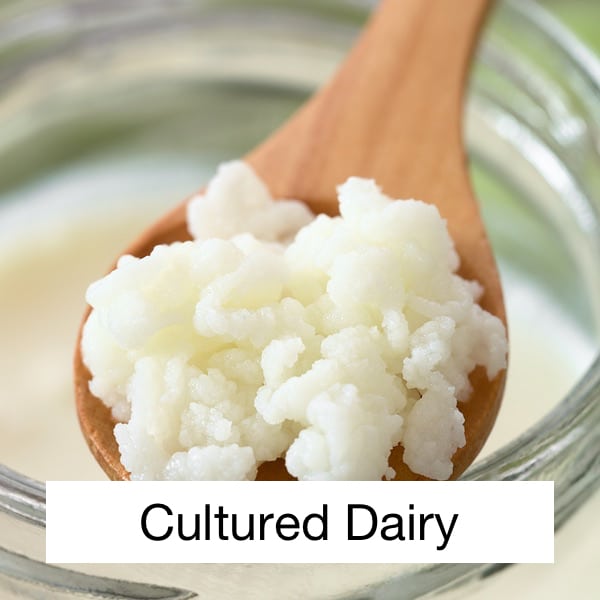
First, I started acclimating dairy kefir grains (see my Resources page for sources) to our raw milk. The first batch (recommended small) went too long – into curds and whey, beyond a thick cultured milk. I didn’t mind; I drank it anyway! Because of my Middle Eastern background, I found the tart, fresh taste wonderful! By today, a second small acclimating batch was ready – this time it hadn’t gone too long – and I enjoyed almost every bit. Haniya shared it with me and she said she liked it.
The other cultured dairy food I began was to make a pure yogurt starter for raw milk yogurt. I chose the villi yogurt starter (see my Resources page for sources), one of their starters that cultures raw milk at room temperature – keeping the resulting yogurt truly raw and full of beneficial bacteria. Many yogurt methods call for heating milk to 160 – 180 degrees, killing many of the beneficial bacteria in the raw milk.
However, making yogurt from raw milk requires a special extra step in order to preserve the strength of the yogurt culture. Each batch of yogurt must be started with a pure culture – you must heat up a small amount of milk to kill its bacteria, so that they won’t dominate the yogurt bacteria. Then this pure culture can be introduced to the raw milk. You only have to do this with a small amount-just for the starter. That’s what I began on Saturday. By today, the 1/2 cup mixture of heated-then-cooled-milk and dehydrated yogurt starter had set to a yogurt consistency. So I put it in the fridge for a few more hours (the directions say for 6 hours). By this evening, I hope to be putting my very first pure culture into raw milk and I’ll be on my way to making yogurt at room temperature. Awesome! I can’t wait.
Finally, I began making chevre from this recipe at FiasCoFarm.com. I’m doing it the “bag” style, using a culture and cheesecloth I purchased from DairyConnection.com, a source that is shared by FiasCoFarm.com and Sustainable Eats. I don’t know if it is going to work. After more than 24 hours of dripping, the bag still feels pretty soft. But… it is supposed to drip for 2 to 3 days, so we’ll see.


ABCs of Grain Mills. Free PDF tip booklet. 


Take the guesswork out of what to fix, what to buy and what to prepare. This week:
Class materials compiled into easy downloads:
Wardeh,
Thanks for posting this! I ordered Villi and Piima starters from CulturesForHealth today, and my next search was going to be for a cheese bag!
I have located a potential source for raw goat’s milk (visiting their small farm next week!), and the first things I want to make are cheese and cultured butter to see if my son can tolerate them. I am so excited that you are a few steps ahead of me in this process so that I can—as always!—learn from what you share.
Love,
Sonya